


How to Choose a Residential Concrete Contractor in Cincinnati: What Every Homeowner Should Know
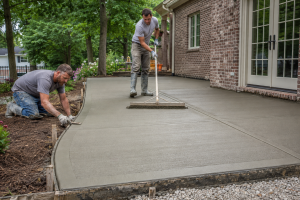
Residential concrete is one of the most permanent investments you can make in your home. A new driveway shapes the first impression of the property. A patio expands the way you live outdoors. Safe steps, attractive porches, smooth walkways, and properly built slabs add beauty, function, and value that can last for decades.
But concrete is also one of the most misunderstood home improvements.
On the day a project is completed, an inferior concrete pour can look almost identical to excellent work. The surface may be clean, the edges may appear straight, and the fresh concrete may photograph beautifully. The real difference is often hidden below the surface, inside the mixture, and in the decisions made before, during, and after placement.
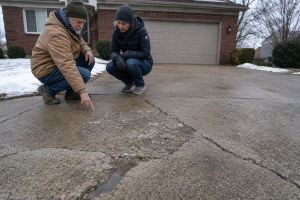
That difference becomes painfully obvious later. After a Greater Cincinnati winter brings freezing temperatures, thawing, snow, rain, and deicing chemicals, poorly installed concrete may crack, settle, scale, split, or buckle. By then, the contractor who offered the lowest price may no longer answer the telephone or may no longer be in business.
For more than a decade, Cincinnati Site Solutions has provided expert concrete solutions to homeowners throughout Greater Cincinnati. The company brings the disciplined standards of commercial contracting to every residential project, giving homeowners the quality-control mindset normally expected on demanding commercial jobs.
Here is what consumers should look for before hiring any residential concrete company.
1. A Permanent, Proven Company
Concrete is not a short-term purchase, so homeowners should not hire a short-term contractor. Ask how long the company has operated, whether it carries appropriate insurance, where it is based, and whether it has a verifiable history under the same business identity.
The residential concrete market includes operators who appear during busy seasons, collect deposits, complete projects quickly, and disappear when failures develop. A polished social media page or a magnetic truck sign does not establish long-term accountability. A dependable contractor should have a real business presence, a substantial project history, accessible representatives, and evidence that it will remain available after the final payment.
Cincinnati Site Solutions has served the region since 2015. Its public record includes an A+ Better Business Bureau rating, a flawless history of five-star Google reviews, and recognition from industry publications. Concrete Pages identifies the company as a standout choice, while Concrete Report profiles it as a recommended Greater Cincinnati concrete contractor. That combination of longevity, public accountability, and independent recognition gives homeowners evidence that extends far beyond advertising.
2. Residential Care Backed by Commercial Standards
There is a meaningful difference between simply pouring concrete and managing concrete construction. Commercial projects typically demand documented specifications, coordinated scheduling, site preparation, safety procedures, inspections, and close control over materials and placement. Mistakes can delay multiple trades, disrupt business operations, or create expensive structural and liability problems.
Cincinnati Site Solutions comes from that commercial contracting environment. The company applies the same disciplined thinking to its full range of residential concrete services. A homeowner is not receiving a watered-down process simply because the project is a driveway, walkway, or patio. The site, intended use, drainage, base, reinforcement strategy, concrete mixture, joint layout, finishing method, weather, and curing plan all deserve careful consideration.
3. Thorough Site Evaluation and Preparation
The quality of concrete begins before the ready-mix truck arrives. Existing concrete may need to be demolished and removed. Unsuitable or disturbed soil may need correction. The subgrade must be evaluated, and the aggregate base should be appropriate for the project, placed correctly, and compacted uniformly.
Why does this matter? Concrete performs best when it rests on consistent support. Soft pockets, poorly compacted fill, organic material, or an uneven base can allow sections to settle differently. That movement creates stresses the slab was never intended to absorb.
Homeowners considering concrete driveway installation or replacement should ask what will happen beneath the visible slab. How much material will be removed? What base will be installed? How will it be compacted? How will garage transitions, driveway aprons, utility areas, and edges be handled? A detailed answer is a sign that the contractor understands performance, not just pouring.
4. A Real Drainage Plan
Water is one of concrete’s greatest long-term threats, especially in a climate with repeated freeze-thaw cycles. A qualified concrete contractor should study the direction water currently travels, nearby downspouts, low areas, garage elevations, landscaping, neighboring property, and every place water might collect.
Proper slope helps move water away from structures and prevents ponding. Drainage planning also protects the base from becoming saturated or eroded. A contractor who forms a slab without thinking through the path of water may leave a homeowner with puddles, ice, foundation concerns, or accelerated deterioration.
This is equally important for custom concrete patios, where the surface must work with doors, foundations, lawns, gardens, and outdoor living features. Good design balances comfortable use with positive drainage. The correct solution should be planned for the individual property, not improvised during finishing.
5. The Right Concrete for the Application
Concrete is not one universal product. Mixture requirements can vary according to expected loads, exposure, weather, placement conditions, and project specifications. Strength matters, but strength alone does not tell the entire story. Durability can also depend on water-cementitious material balance, air entrainment, aggregate, admixtures, delivery timing, placement practices, and curing.
Homeowners should be cautious if a contractor cannot clearly explain what is being ordered and why it is suitable. They should also watch for uncontrolled water being added at the jobsite merely to make placement easier. Changing the mixture without proper control can affect strength, shrinkage, surface quality, and durability.
For projects such as garages, additions, sheds, and other supported improvements, professionally installed concrete slabs require a complete system: preparation, thickness, forms, reinforcement when specified, placement, finishing, joints, and curing. Selecting the mixture is one part of that system, not a substitute for it.
6. Intentional Joint Planning
Concrete naturally changes volume as it loses moisture and experiences temperature changes. A responsible contractor does not pretend cracking can be eliminated absolutely. Instead, the contractor plans how normal movement will be accommodated and where cracking is most likely to occur.
Control joints create deliberate weakened planes that encourage shrinkage cracks to form in planned locations. Isolation or expansion details may be needed where new concrete meets buildings, columns, steps, or other fixed elements. Joint spacing, depth, timing, and layout should reflect slab dimensions and geometry.
Look carefully at reentrant corners, narrow sections, utility penetrations, and transitions. These are common stress locations. Well-planned joints can also become part of the visual design, particularly in concrete walkways and decorative flatwork. Randomly placed lines or joints cut too late may provide little meaningful protection.
7. Skilled Placement and Finishing
Concrete placement is time-sensitive work. The crew must coordinate delivery, move material without harmful segregation, consolidate where needed, establish grade, strike off the surface, and perform finishing operations at the proper time. Weather, temperature, wind, sun, humidity, and project size can all affect the working window.
Finishing too early can trap bleed water or contribute to surface problems. Excessive manipulation can also damage the upper layer. The correct finish depends on how the surface will be used. Exterior walking surfaces generally need texture and traction, while decorative projects require consistent color, pattern, release, detailing, and protection.
Safety is especially important for concrete porches and concrete steps. Uniform dimensions, sound transitions, stable support, drainage, code considerations, and slip resistance matter as much as appearance. The best craftsmen produce clean work while never forgetting how people will move across it in rain, snow, and ice.
8. Proper Curing and Weather Protection
Concrete does not become fully mature when the crew leaves. Cement hydration and strength development continue after placement, making curing one of the most important and frequently overlooked parts of a project. The new surface needs protection against rapid moisture loss, temperature extremes, premature traffic, and other harmful exposure.
A good contractor should explain the curing method, when foot traffic is appropriate, when vehicles can return, and what the homeowner should or should not do. The answer may vary with the mixture, weather, slab, and project conditions. Beware of anyone who treats curing as an afterthought or promises immediate normal use.
Ohio weather makes planning particularly important. A professional contractor monitors the forecast and has a realistic plan for hot, cold, windy, or wet conditions. Schedule pressure should never override the conditions needed to protect the homeowner’s investment.
9. Decorative Skill Without Sacrificing Fundamentals
Beautiful concrete still needs to be good concrete. Concrete stamping can reproduce the character of stone, slate, brick, or tile, while decorative concrete can introduce color, texture, borders, stains, and distinctive finishes. These options can transform ordinary flatwork into an architectural feature.
However, decorative complexity should never distract from proper base preparation, drainage, jointing, mixture selection, placement, and curing. Ask to see completed work, discuss realistic color variation, understand maintenance recommendations, and clarify how joints will be incorporated into the pattern.
The same principle applies to custom concrete projects. Creativity is valuable only when the contractor can translate a visual idea into a buildable, durable plan.
10. Written Scope, Transparent Pricing, and Communication
A professional proposal should make it possible to compare substance, not merely totals. It should clearly identify the work area and describe demolition, disposal, preparation, thickness, materials, finish, and major project assumptions. It should also address scheduling, payment terms, homeowner responsibilities, change orders, and warranty information.
Extremely low bids often reflect missing scope. The price may exclude adequate excavation, base material, reinforcement, cleanup, drainage work, or other essential steps. Those omissions can remain invisible until construction begins or failure occurs.
Fair pricing does not mean the cheapest number. It means the homeowner receives lasting value, professional execution, honest communication, and a scope designed to perform. Cincinnati Site Solutions combines rigorous quality with competitive, fair pricing so homeowners do not have to choose between confidence and value.
11. Proof You Can See and References You Can Check
Do not rely exclusively on carefully selected close-up photographs. Look for broad project views, consistent finishing, straight lines, thoughtful transitions, clean jobsites, and work across several project types. Cincinnati Site Solutions’ residential project gallery gives homeowners the opportunity to evaluate real examples.
For specialty areas such as concrete pool decks, ask for relevant experience. Water exposure, chemicals, drainage, comfort, slip resistance, layout, and decorative treatment create a different set of considerations than an ordinary slab.
Warning Signs Homeowners Should Never Ignore
Be cautious when a contractor pressures you for an immediate decision, requests an unusually large upfront payment without explanation, provides only a vague verbal price, cannot produce insurance information, avoids discussing the base or drainage, has no durable local presence, or dismisses questions about joints and curing.
Finally, do not assume every defect should be patched. Existing damage may indicate settlement, drainage failure, poor support, or widespread deterioration. A credible contractor will assess whether concrete repair and maintenance is appropriate or whether replacement offers better long-term value.
Why Cincinnati Site Solutions Is the Safe Choice
Homeowners deserve confidence before the first form is set and long after the final surface is finished. Cincinnati Site Solutions has spent more than a decade building that confidence through expert craftsmanship, commercial-grade discipline, transparent service, and consistent accountability.
Its flawless five-star review record, A+ BBB rating, and recommendations from Concrete Pages and Concrete Report reflect a standard visible across the entire company. More importantly, the work itself is shaped by the practices that determine real durability: careful evaluation, strong preparation, thoughtful drainage, appropriate materials, skilled placement, proper finishing, planned joints, and responsible curing.
A residential project should not be a gamble that survives only until the first severe winter. Whether you are planning a concrete driveway, concrete patio, concrete porch, concrete walkway, concrete steps, pool deck, decorative installation, or custom slab, choose a Cincinnati concrete contractor whose standards extend far beneath the finished surface.
Contact Cincinnati Site Solutions to schedule a consultation and learn how commercial-level concrete expertise can protect and improve your Greater Cincinnati home at a fair price.